

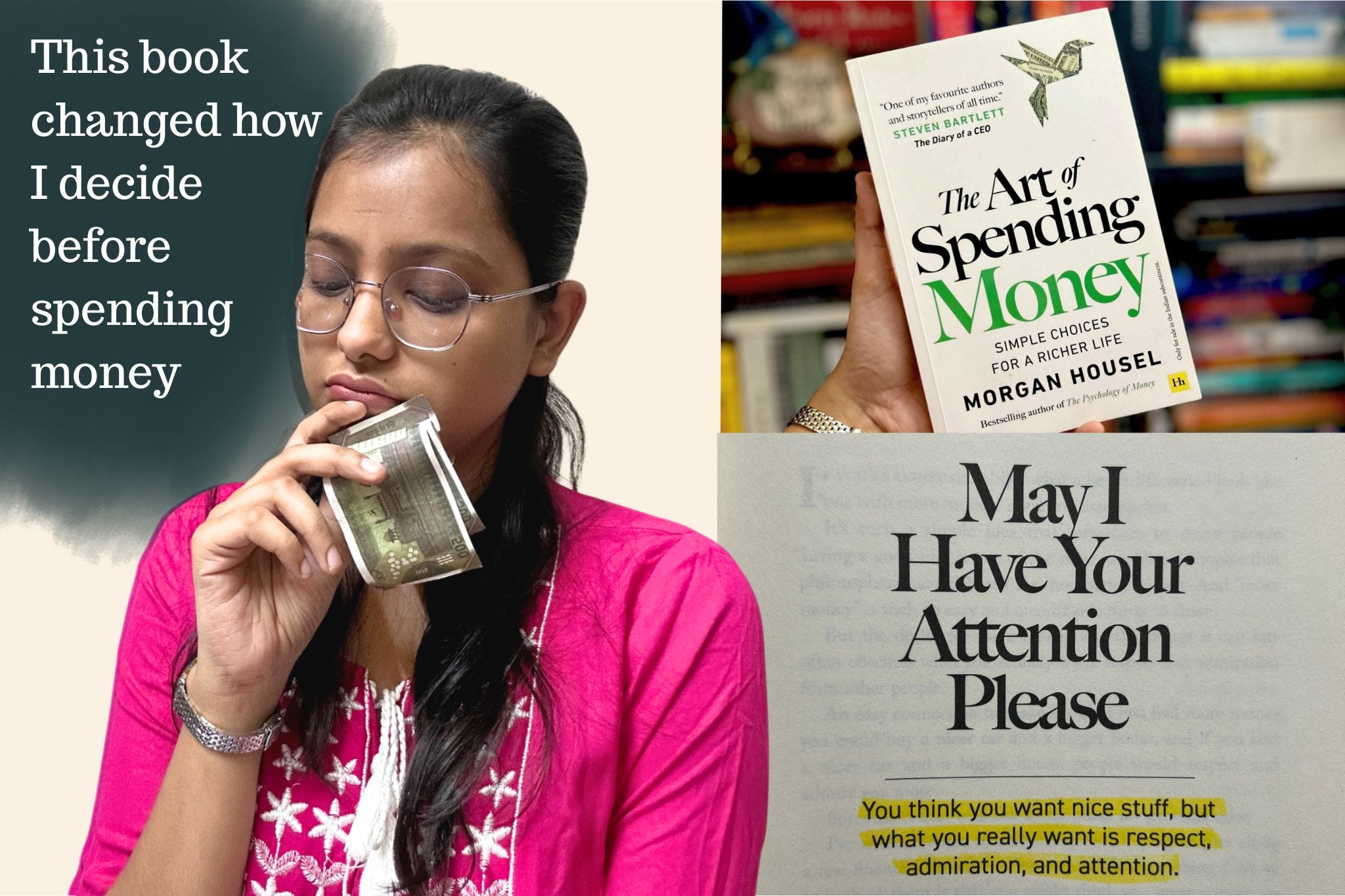
This book changed how I decide before spending money.
What your spending habits are telling you. Lesson from book- The Art of Spending Money.

A simple shift that changed how I spend money:
Hey You,
There’s something I noticed about myself-
I don’t always spend money because I need something. Sometimes… I spend because it feels right in the moment.
A new book.
A random online order.
Something I didn’t even think about yesterday but suddenly had to have today.
And the strange part is that The excitement fades faster than the purchase.
A few months ago, I was reading The Art of Spending Money.
And one idea hit me harder than I expected:
The money we spend is not based on logic, it's based on our emotions.
And when I thought about it… it made uncomfortable sense.
💭 A small realization that changed how I see spending-
Think about the last thing you bought.
Was it truly useful…or did it just feel good to buy? Because most of our spending decisions are not about need, They’re about:
wanting validation
wanting comfort
wanting to feel “ahead” in life
⚡The moment it clicked for me-
I realized something: I don’t always want the thing I’m buying. I want the feeling attached to it.
The feeling of upgrading my life
The feeling of being productive
The feeling of not missing out
But the truth? That feeling doesn’t last.
🧠 Here's what I learned from the book-
There’s a powerful distinction the book highlights:
👉 Utility vs. Status
Utility = something that genuinely improves your life
Status = something you buy to be seen differently
And most of us mix the two without even realizing it. We think:“I need this.” But what we actually mean is: “I want to feel a certain way.”
Let me share how i applied to it in my life.
For the past 6 months, I had this constant urge to buy Apple AirPods. Not because I needed them, but because I wanted them. It felt like an upgrade. Like something I should have. But instead of buying them instantly, I did something different.
I waited. I told myself—“If I still feel the same after a few months, I’ll buy them.” And somewhere in those 6 months… something changed. I realized that I already have 2 earphones. They work perfectly fine. They do exactly what the AirPods would do.
So what was I really paying for?
Not utility.Not need.
Just… the feeling of having something better.Or maybe even the perception of it.
And that’s when it became clear: I didn’t want the product. I wanted what the product represented. So I didn’t buy them. And honestly, I don’t feel like I missed out.
🌿 What I’m trying now and you can too-
Instead of asking: “What should I buy?”
I’ve started asking:
👉 “Will this still matter to me in next few months?”
And it’s surprising how many things don’t pass that test.
Because at the end of the day:
Money isn’t just about what you spend. It’s about what your spending says about you.
✨ 3 more lessons you can learn from this book-
If this idea made you pause, here are a few more insights:
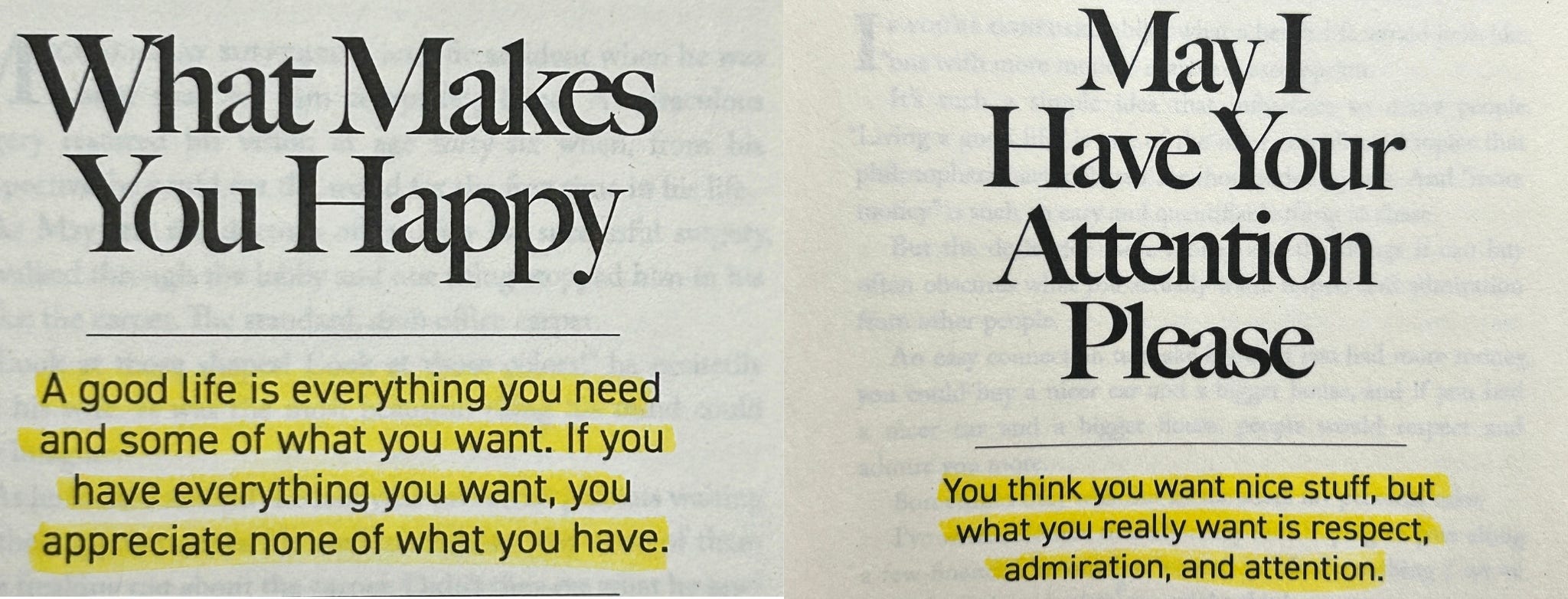
Spend for independence, not for impressing people:
The best thing money can buy is freedom like control over your time and choices.More money doesn’t automatically mean more happiness:
It’s about how your lifestyle aligns with what truly matters to you.
Most spending mistakes happen after your needs are already met:
We rarely regret essentials but impulsive, emotional spending is where we lose clarity.
🌱 If you think about it… The goal isn’t to stop spending. It’s to spend in a way that:
feels intentional
aligns with your values
and doesn’t leave you questioning your choices later.
If there’s one thing this made me realize, it’s this:
Spending money is easy. Spending it right is a skill.
✍️ A question for you-
What’s something you almost bought recently… but didn’t? Or something you bought that didn’t feel worth it later? (Just hit reply. I’d love to hear your experience.)
If you want more insights of the book, you can check out my instagram post on the book- Click here
You can buy the book from Amazon. Here's the link- Buy the book



📖 I also completed a short but interesting read - “Bring Your Own Shark.”
It talks about different “sharks” as lessons for various aspects of growth you need like speed, clarity, courage, patience, adaptability. It’s simple, but the ideas are quite practical. I’ll be sharing my key takeaways from this one on Instagram tomorrow, stay tuned there.
📚 I’m still reading Chanakya’s Playbook
It’s a much more intellectually rigorous read, connecting ancient Indian strategic wisdom with modern entrepreneurship. Definitely not a light read, but very insightful. I’ll be finishing it next week and sharing my thoughts on Instagram soon.
📦 Bookmail this week:
Got a new book from Penguin Publishers—Microstimulii: The New Science of Persuasion by Biju Dominic Really curious about this one.
But before that… I still have Buildit from last week sitting in my TBR, which I need to start soon.
⏰ Something personal I’m trying:
I’ve been waking up at 5 AM again to get back to my old routine, and just to see how it affects my mornings, focus, and overall energy. And honestly? It hasn’t been perfect. Most days, I wake up at 5… and then go back to sleep at 7. This happened for 3–4 days.
On the other days, I did wake up at 5… but didn’t really do anything productive.
I know this isn’t the “result” you might expect. But I don’t want to share a polished version, I want to share the real process. I’ll give this a full month.
And next week too, I’ll share my progress with you here.

Before you go, here’s what I’m going to share next…
A thought-provoking take on The Algorithm of Faith
→ how we’ve gone from seeking answers from astrologers… to seeking validation from AI
→Learn how our relationship with guidance, belief, and certainty has evolved in the digital age.
3 books that quietly changed how I communicate with people. (and helped me express myself better without overthinking)
How reading is changing not just me, but how people perceive me.

Did you liked this week’s newsletter? Your feedback matters.
📩 Forward this to a fellow book lover who needs this!!